
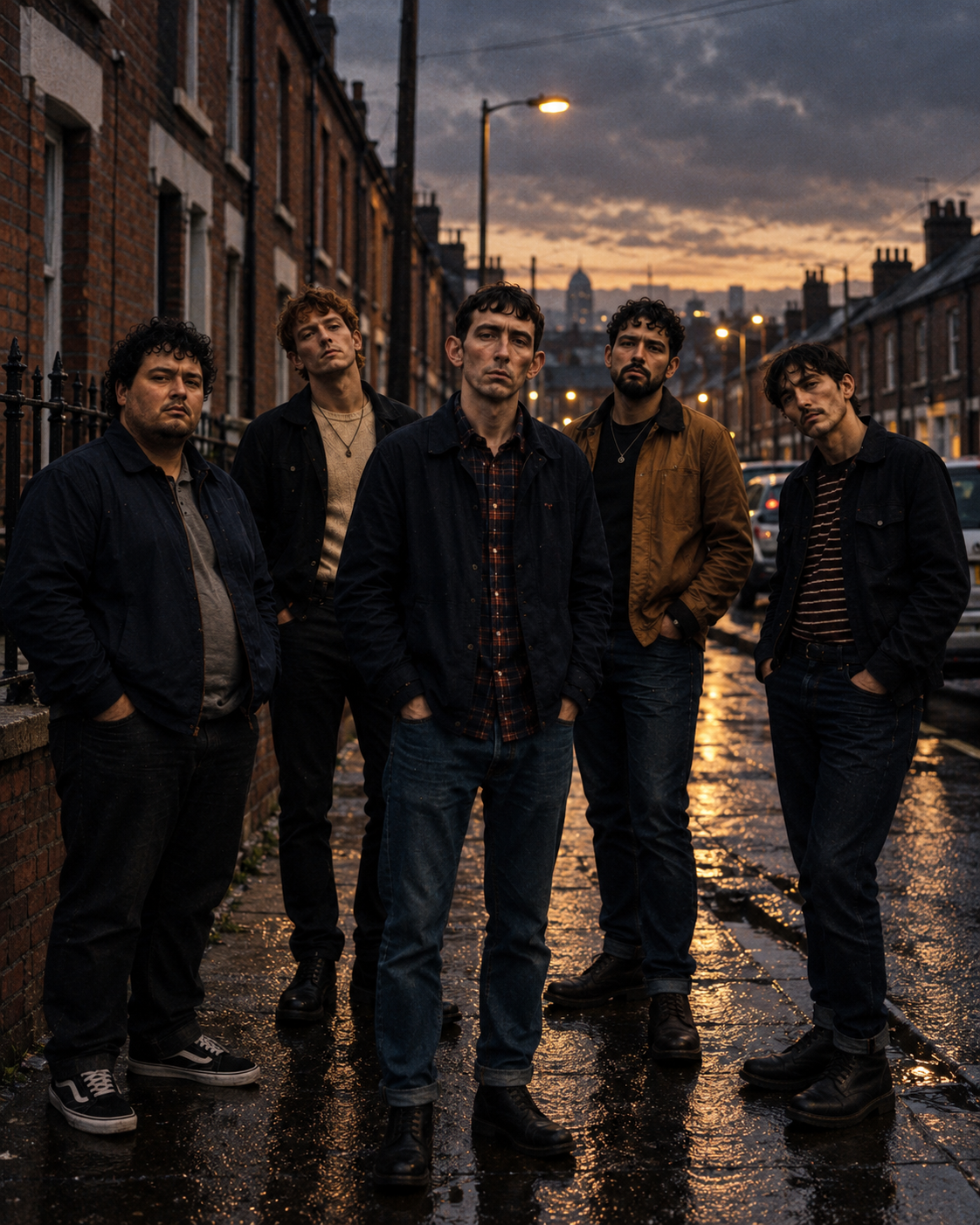
Noah · Eli · Jamie · Connor · Finn
Journey Home
Carrick Road began with five lads who had known one another for most of their lives.
Noah and Eli, twin brothers.
Jamie and Connor, another pair of brothers.
And their cousin, Finn.
They grew up in the same working-class part of Dublin, close enough that the boundaries between friendship, family and neighbourhood were never particularly clear. Music happened in bedrooms, kitchens, pubs, community spaces and anywhere else that would tolerate five young men making too much noise.
Noah became the group’s lead singer and principal songwriter.
For a long time, he was also the one carrying the most private weight.
Growing up, Noah struggled with his sexuality and with the fear that being honest about it might separate him from the people he loved most. What he did not know was that he was not the only one in the family hiding.
Two of his brothers were gay too.
What Noah had imagined as a solitary secret turned out to be part of a much larger family story.
That changed the writing.
Carrick Road’s songs became increasingly open about love, shame, friendship, family and the awkwardness of trying to become yourself while everybody around you is doing the same thing. They were never interested in presenting queerness as spectacle. It was simply part of the lives they knew.
Carrick Road became part of Difraxity because of that honesty: a queer voice rooted not in performance or provocation, but in ordinary working-class lives and the complicated relationships between brothers, cousins, friends and the place that made them.
Their only album, Journey Home, came out of that world.
Then came the accident.
Four members of Carrick Road were killed in a road traffic collision.
Only one survived.
The title of the album became something nobody connected with the group could ever hear in quite the same way again.
Journey Home survived the band.
The songs did too.
Carrick Road now exists in recordings, photographs, memories and in the testimony of the one member left behind — five voices captured before anybody knew that the road home would become the last image attached to their name.
There is no attempt to turn the tragedy into mythology.